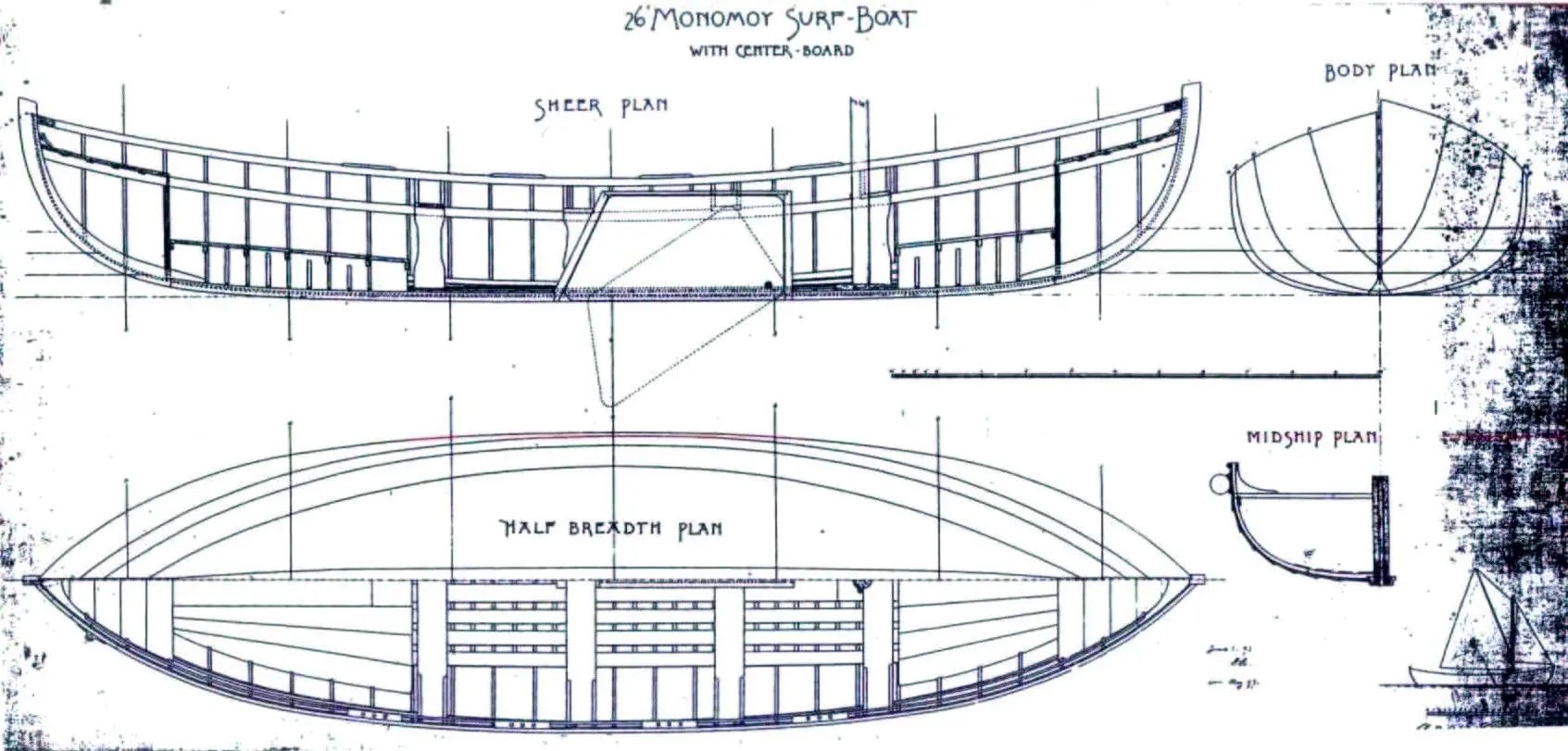
The unique legacy of rowing as a team sport stems from its origins in antiquity from commerce, transport, lifesaving, and naval warfare. Whaleboat racing in particular has been an integral part of the San Francisco Bay Area maritime community for well over 100 years. The whaleboat was once the most widespread of all small craft; in the late 1800's it was known throughout the world and could be found in some of the most remote places on earth.
In 19th Century America, competition between watermen became very popular with the public soon after the formation of a Republic where tens of thousands of people earned their livelihood propelling watercraft with oars. From fishermen and whalers to pilot gigs and life-savers, from naval frigate-tenders and harbor ferries to Whitehall taxis and ships' provisioners, hoards of people in America pulled an oar for a living.
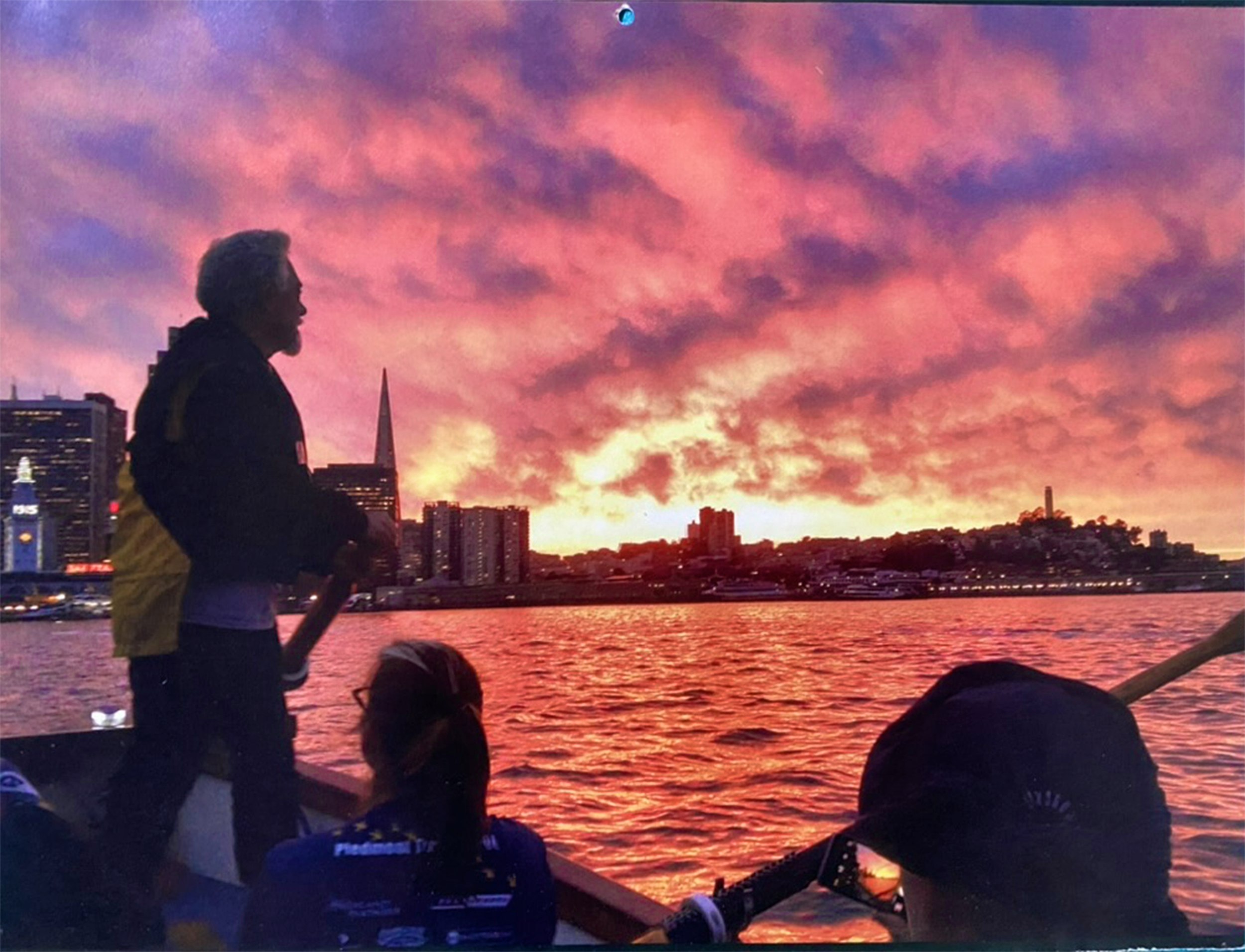
One strictly enforced rule in those days was that whichever local boatmen first reached an incoming ship would be entitled to its business while it was in port — so the sighting of a visiting ship triggered a real race. As the great windjammers and steam ships of the mid-1800's came to the Barbary Coast, local boatmen scrambled to react to their entrance in the harbor. In 1849, a house on Telegraph Hill was erected for the purpose of making signals visible throughout the city. With word of approaching vessels, competing ships' chandlers raced each other as they rowed out to be the first to sell their outfitting services. Once in Yerba Buena Cove, the visiting ships' crews often faced long layovers while their captains negotiated for cargo to carry on the return voyage. With wages spent and time on their hands, the crews would race their lifeboats.
All of this led to dramatic contests, although fairly disorganized, and soon caught the public's attention and interest. With this attention grew the opportunity to make a quick dollar by betting on the outcome. Through the early 1800's, larger and larger crowds were drawn to these match races, which evolved from marginal contests to mainstream events.
By 1873, rowing was the most popular sport in the Bay Area, with a total of nine rowing clubs in San Francisco alone. Professional rowers were celebrities, and even a few fearless women started to participate as well. Meanwhile, rowing, like any successful venture, developed a dark side. Cheating, throwing and fixing races, damaging equipment, poisoning, and death-threats were known to occur. Samuel Crowther wrote in Rowing & Track Athletics in 1905:
A race between prominent crews was witnessed by ten to fifty thousand people, and the betting was like that on a horse-race. Modern police arrangements were unknown, and the referee seldom decided against the home crew. In match races, each sculler was followed by a pilot barge, usually rowed by eight oarsmen with a passenger in the bow, who urged the sculler on and at the same time intimidated the opponent; it was win at any cost. The visiting oarsman had little chance; if the crowd did not break his boat before the start, he would have to run a gauntlet of craft as soon as he took the lead, and many a man had his boat cut in two by a barge when leading toward the finish – every trick possible was played.
Scandals began to spread among the professional rowers, and a consequent call for the purity of amateur oarmanship in the sport changed the clubs from a colorful rough-and-tumble collection of outcasts to a respectable group moving up in the middle-class. We still strive for this ascension today.